

I'm Colombian, based in Bogotá, and I work where AI engineering and product design meet. That combination is the point: I can talk to users, design the interface, reason about model and tool behavior, and still sit inside the codebase.
I build high-fidelity prototypes in Figma and Framer, then ship production UI in Vue or React with the backend and data work to support it. Node, Python, Ruby, Postgres, Mongo, APIs, and deploy pipelines are all familiar terrain.
My AI work connects model APIs, agent workflows, MCP tools, evaluation thinking, and the interface states people need to understand and control the system. I use OpenAI, Anthropic, and Gemini tools today, while actively exploring LangChain, LangGraph, Langfuse, LangSmith, pgvector, and Pinecone for orchestration, observability, evaluation, and retrieval.
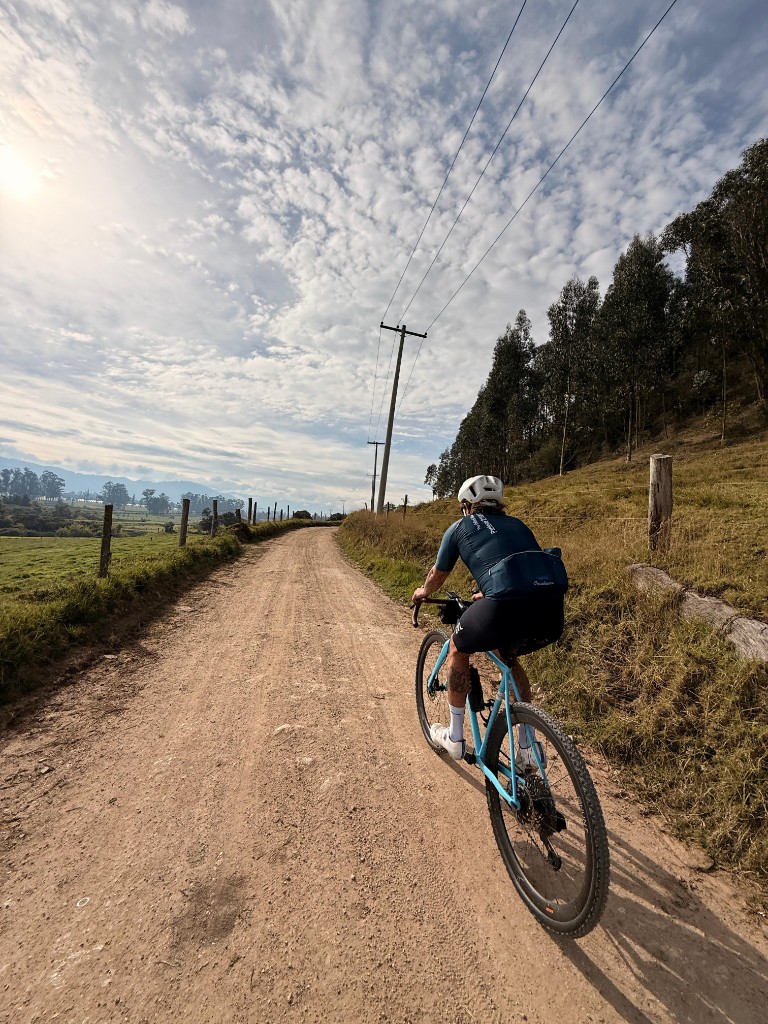
When I'm not at a screen I'm usually on a gravel bike, playing golf, or testing a new workflow to see whether it is useful after the hype wears off.
What I'm into this week.
I keep this honest, on a low-stakes schedule. Updated whenever it stops being true.
I design the experience and engineer the system.
The useful part is not just knowing many tools. It is knowing which layer of the product needs attention next—and carrying the decision through to working software.
I start in the product problem, not the file format. That might become a Figma prototype, a Framer flow, a Vue screen, or a small automation that proves the idea faster.
Because I can ship the interface myself, I catch constraints early: API shape, loading states, events, permissions, analytics, and the details that make a handoff real.
I approach AI as a product system: model behavior, tool boundaries, evaluations, interface states, human review, and the evidence needed to improve it safely.